Tuesday, April 5, 2016

Core Post 4

Henry Jenkins’ article, “The Cultural Logic of Media Convergence,” reminds me of an article we read before, “Star Trek Rerun, Reread, Rewritten: Fan Writing as Textual Poaching,” because it is obvious that his research on fans and fan culture provides his theory of media convergence with a foundation. When he talks about media convergence, he focuses on the relationship between production and consumption, producers and consumers, to explore the cultural logic of these relationships in the new media ecology, i.e., to discuss the future development of media convergence and to rethink the effect of media convergence on the social structure. As he claims, “media convergence is more than simply a technological shift.” He points out that “convergence alters the relationship between existing technologies, industries, markets, genres, and audiences.” In the article, using the term “convergence” liberally, alone, without placing “media” ahead of it, indicates that he prefers to emphasize a macroscopic analysis of the new communication pattern. Meanwhile, he points out that uneven social development would be reflected in the uneven rate of convergence, and the power of the collective intelligence would reshape the forms of social community and balance the hegemonic power of the traditional media environment. However, the power of the collective intelligence embodying the active behavior of the consumers raises an ambivalent and more complicated media system that involves economy, politics, and law. We have to be dialectical to talk about the sentence that “some fear that media is out of control; others that it is too controlled. Some see a world without gatekeepers; others a world where gatekeepers have unprecedented power” (34).

Just think about the presentation I gave in week 8. In the “we media age,” the consumers of traditional media became the grassroots producers of new media, and they use the new media as a communication means to make the social experiment videos. Nevertheless, when they record others’ behavior candidly and blame them, it is a way of social supervision or "medium Justice," which is to intervene in the judicatory independence by reason of press freedom; that is, judicatory justice is replaced with morality justice.

Core Post 4: Howard Dean and the Double-Edged Sword of Convergence


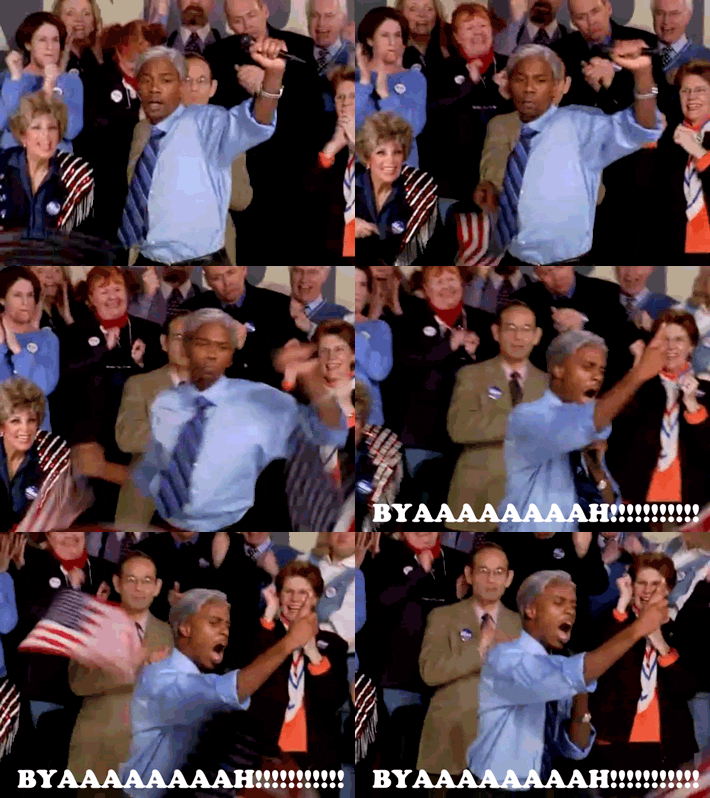
"Furthermore, early signs are that blogging may play a decisive role in shaping the 2004 American presidential elections, having been identified as a key factor in propelling maverick candidate Howard Dean into the front ranks for the Democratic Party nomination." Rarely has a salient point in a scholarly work so quickly sent me into a fit of knowing laughter than this nugget from Henry Jenkins. To Jenkins' credit, there's no way he could have known that the same media channels that led to the precipitous rise of Howard Dean would ultimately (and just as quickly) lead to his implosion. A quick refresher for those who may not remember, Howard Dean was the former governor of Vermont and one of the leading candidates for the Democratic nomination in 2004 that would ultimately go to future Secretary of State John Kerry. His rise was built largely on the enthusiasm of young voters and bloggers communicating via then-new social media platforms. However, it all came crashing down on January 19, 2004, when Dean, delivering a speech after a respectable third place finish in Iowa and feeding on the energy of the crowd, let loose what came to be known as the “Dean Scream”, a high pitched screech accompanied by a cartoonish thrust of the arm that has largely defined Dean for a decade. It remains the first image result when searching for Dean and “Howard Dean Scream” is the first suggestion from Google when typing in the governor’s name.
History has since filled in the gaps as to what happened on that day. Dean and his staff insist that the crowd in the room was much louder than they appeared on television and thus Dean’s microphone was mixed too high, but these details did not matter in 2004. The Dean Scream quickly became a meme mocked on late-night television (including Chappelle’s Show, posted at the top of the page) and shared across the internet, ultimately dooming Dean’s campaign in one of the silliest turns in American politics. Dean, though, would not be the last politician to be undone by the uncontrollable forces of web mockery. Rick Santorum, presidential candidate in 2012 and 2016, famously had his name turned into a graphic sexual innuendo by blogger and activist Dan Savage. For years, a search for Santorum would yield Savage’s definition before that of the Senator, despite the candidate’s objections. 2012 saw Republican Rick Perry implode immediately after a debate gaffe that came to be known as the “Oops moment”. Again, bloggers and citizens on social media pounced on this, repeating it ad naseum and dooming Perry’s prospects in both 2012 and 2016

These unforced errors exacerbated by social media and other online outlets have quickly become commonplace in American politics. Already this election we’ve seen Marco Rubio crumble after a roundly mocked debate performance that led to the moniker “MarcoBot”. One might even argue that this election cycle has produced the first candidate to thrive on the viral possibilities of unpredictable ignorance, that being of course Donald Trump. Still, Howard Dean illustrates a perfect example of both how a candidate can leverage the climate of media convergence to create supporter bases through online outreach and how those same media outlets can lead to a candidate’s undoing with one brief, hilarious scream.

http://fivethirtyeight.com/features/the-dean-scream-what-really-happened/

Core Post 4: Industry Studies and Neoliberal Optimism

In his 2004 article, “The cultural logic of media convergence,” Henry Jenkins presciently identifies two opposing and simultaneous shifts in media culture of the twenty-first century: the proliferation and diversification of content as a result of new technologies on the one hand, and on the other the increasingly vast control of media industries by a handful of multinational conglomerates. Although Jenkins makes a number of startlingly accurate predictions about the future of television and media – for example, when he discusses the future of subscription-based and streaming services for online television – I wonder whether he remains excessively rooted in a neoliberal ideology, particularly when he writes, “contemporary consumers may gain power through the assertion of new kinds of economic and legal relations and not simply through making meanings” (Jenkins 36). The ‘empowered consumer,’ to me, is on some level reminiscent of the post-feminist ‘empowered woman,’ gaining respect or recognition within the confines of a certain social, political, or economic structure without questioning or destabilizing its fundamentally unequal foundations. Jenkins seems, on some level, to accept the binaries that Caldwell, in “Convergence Television,” is looking to trouble -- describing the new media consumer as radically different from the old, active where the latter was passive, migratory where the latter was stationary (Jenkins 37). Caldwell argues that there has not been a radical break in media and industry practice, but rather, a reconfiguration of old norms to adapt to changing technologies.
One of Jenkins’ most interesting assertions, in my opinion, comes near the end of his piece, when he writes about the shifting role of the public intellectual in this new media age: “Hartley notes that [scholars] have historically been more comfortable collaborating with state institutions than private corporations. But, in an era of privatization, cultural policy is increasingly being set not by governmental bodies, but by media companies; we lose the ability to have any real influence over the directions that our culture takes if we do not find ways to engage in active dialogue with media industries” (Jenkins 42). Once again, Jenkins’ optimism troubles me; he seems to unquestioningly accept that we are in an “era of privatization,” and seems to willfully ignore the ways in which his own position – as a white man already positioned within the intellectual elite – might grant him a power or ‘legitimacy’ in engaging with media corporations while other voices will inevitably be left out.

It might have been impossible for Jenkins to fully foresee the advent of social media (which I do not want to unquestioningly accept as positive or wholly democratic either), but I am curious about the contemporary character of the ‘showrunner’ (Shonda Rhimes, Matthew Weiner, and I. Marlene King come to mind) in contemporary television as a new kind of public intellectual – one whose position within the industry is clearly delineated (rather than some kind of insidious intellectual-on-a-payroll, which is what Jenkins’ scenario would seem to imply), and whose affiliations are entirely outside the academy, but who nevertheless can claim a certain creative autonomy and construct an individuated persona through which s/he can connect directly with fan communities and the public while also directly impacting media output. Perhaps the binaries mentioned above – active vs. passive, migratory vs. stationary – might be better applied to showrunners than consumers themselves. If so, does the showrunner disrupt the producer-consumer binary or reify it?

Core Post #3: TV + Industry Studies

In Vertical Vision: Deregulation, Industrial Economy and Prime-time Design, Jennifer Holt discusses the political and economical contexts of the television industry that set a programming standard, leading to the conglomerate format we see today. Hold organizes her article in a chronological compilation of regulations towards the entertainment industry, which she sees as a consequence of “political philosophy behind broadcast regulation over the last twenty years” (10). Most relevant of them all, the Financial Interest and Syndication (Fin Syn) Rules had the largest impact over the organization of the entertainment industry. As a move to favor the free market, based on free competition, these regulations installed by the FCC forced studios and networks to merge, in order to afford cost of production and distribution.
One of the aspects raised by Holt that stood up to me in her analysis was the concept of ‘must see TV’. A product of synergy between big companies of the entertainment business, television became a refined production, based on specific demographics, and capable of expanding to a global audience. Studios today are destining their budget to open out their shows to a broader market, which could only be possible through partnership with different companies within the industry. Taking Sony Television, for example, a studio independent from distribution networks, their current investments are focused on hiring ‘premium writers’, the key to producing ‘premium content’. These huge, popular productions inform the change in television industry referred by Holt. In the new, contemporary sense of ‘must see TV’, the distribution channel becomes secondary and artist name speaks up. When multiple options for watching television take over our screens (cable, home video, pay-per-view, online streaming, etc.), the viewer is no longer worried about the channel through which is accessing that episode. Once unavailability is no longer an obstacle, the choice for a television series is then conducted by its content and quality.
The so-called ‘straight-to-series’ form of production, the kind that skips the pilot format and go straight to series development, is an alignment with this movement towards valorization of the artist’s work. Based on independent productions, this form of development can be seen in Netflix Originals – which aren’t really produced by Netflix, but by hired studios, since Netflix is exclusively a distribution platform.
The way Jennifer Holt understands the structure of the television industry as determinant of programming is an interesting perspective that many times ends up forgotten when analyzing TV shows and their contents.


Who Owns What

This week's readings do a stellar job of untangling the history of vertical and horizontal media convergence approaching the new millennium, and put forth some new ideas for theoretical frameworks through which to view our new multimedia multinational convergence culture. However, these giant corporations are changing faster than we can write about them, which means some of Jennifer Holt's history in particular feels cut off too soon.

If you're looking for a list of what each of the big media companies own (it's so much more than TV and videogames), you can head over to the Columbia Journalism Review. It has a section called "Who Owns What" that allows you to search by media conglomerate. Just a heads up though that even this information is out of date, since Time Warner Inc announced several new acquisitions last month. 

Core post 4: TV & Industry

Core Post 4: TV & Industry

This week’s topic is TV and industry, and we have learned from the previous class how text, audiences, and industry links together to influence the genre. IN this week’s readings, though the three authors all touched on television convergence, they hold different attitudes and strengthen in the future of television.

Jennifer Holt’s article “Vertical Vision: Deregulation, Industrial Economy, and Primetime design” relies more on the history of regulation and deregulation in the American Television history. The Financial Interest and Syndication Laws, and the post-Fin Syn era indicates the how the industry survived and powered itself from government involvement. Like a modern chicken farm, the industry formed together and used up all portions of a product to gain profit. While Holt’s article is very informational and industry related, she did not foresee much of the future of television under the digital age. Henry Jenkins’ s article thus focuses on the convergence of media and gives an open question on the future of television. Jenkin starts his article with the current contradiction between the massive production and the intensive concentration of media ownership. He points out the future of television may become like a “kludge, a jerry-rigged relationship between different media technologies” (P34) He defines convergence as “ more than a corporate branding opportunity, which represents a reconfiguration of media power and a reshaping of media aesthetics and economics.” (p35) He leaves nine sites to leave a question mark to his readers not only the altering relation between producers and consumer but also the future of television.

Unlike Bolt’s historical research and Jenkins’s leaving a questions mark, John Caldwell does not only explain the history of the industry relation in television but also point out the threat that digital world put on the television industry and why television will survive from the digital age. Caldwell admits that the television industry is strong enough and cooperated enough to adapt quickly to the new system. He mentions that television will be more adaptable to the digital world than feature films and technology industry because of the five elements television embed: ancillary textuality, conglomerating texuality, marketing texuality, ritual textuality and programming textuality. Through old tradition and innovative practices, television will be able to capture audience’s attention regardless of changes.  Although I think his point is a bit too optimistic about the future of television because the article did not foresee the online-streaming network’s invasion, Netflix, Hulu, and the on-going devices, I agree with the majority of his point. The easiest way to claims its position is to make excellent series that attracts people and an example will be HBO’s “Game of Throne.”


I agree with the notion that the television survives and adapt quickly in the digital era because there are examples of how television is utilizing its advantages to stand out and even beat the film industry. “Game of Throne” is the most popular series nowadays that HBO had premiered since 2011. As a division of Time Warner, HBO creates a revolution of fully use the resources of the network and make American TV compete with feature films, and receive massive international audiences. Different from the “sole authorship” in the movie industry, television took the advantages of the existing writers team model and treated each episode as a separate feature film quality. While at the same time, HBO launches each season both on it only cable channel but also in the HBO’s digital channel and various other digital channels. The success of “Game of Throne” certainly need to do with the audiences interaction, the content, its genre, the filming quality, but also the television industry’s response to the arrival of the digital age.  In fact, the show is using the digital world to promote itself. 


However, the threat does not go away when streaming companies like Netflix are producing its series like “House of Cards” that had the good quality, good scripts, and strong actors as well. Though the streaming network may not have the same amount of resources up until now, it may share the same sources with TV in the future. Thus, there is an inevitable battle in the future between traditional television conglomeration and emerging digital product. 


Monday, April 4, 2016

Core Post 3 - Worshipping at the Altar of Convergence: Integrated Paratexts Within established Texts

In thinking of the ways in which academics make themselves "quotable" which Tara brought up in class last week, we have another listicle from USC's own Henry Jenkins in his article "The Cultural Logic of Media Convergence." In it, it is indeed quite quotable, and works by posing a series of predictions and questions through its list for scholars to engage with for years to come to understand the ways in which the televisual landscape is changing because of the interactions of fans and audiences with the media texts themselves, and because of the ways in which the Internet and other new emerging technologies have shifted viewing and engagement practices. While reading Jenkins' article on the moment of media convergence that we find ourselves in, I began to think not only of Jonathan Gray's work on Paratexts (a scholar that Jenkins has worked with closely) but about the convergence of media within itself, the meta-commentary that Jenkins gets into with his discussion of the 9 different types of media convergence that he sees emerging and predicts the continuation of on through the future of industry based media. What I hope to discuss whether here on the blog or in class, are not only the ways in which media is expanding to have viewers/participants/the audience be actively involved in their consumption of media across platforms, across paratexts, but of particular moments where the industry's tries to appeal to fans themselves from multiple shows through integration of convergence through the diegetic worlds themselves to entice viewers and fans of shows to engage with and potentially become fans of other works.

Top: Archer (S4E1), exterior intro shot
Bottom: Bob's Burgers (S1E3), exterior shot
Specifically thinking about two texts that only touch in one small way, that the lead voice actor H. Jon Benjamin plays both leads of the separate shows, the convergence of Archer and Bob's Burgers in the Archer season 4 episode 1 entitled "Fugue and Riffs" is particularly interesting to note when thinking of the ways in which these texts are trying to engage their fans while also potentially trying to entice new fans to watch their show. When looking at Jenkins' listicle, he points out in his section entitled "Rethinking Media Aesthetics" that "the interplay between...works can create an unprecedented degree of complexity and generate a depth of engagement that will satisfy the most committed viewer." [1] By having this nod to Bob's Burgers puts the two shows fans in potential conversation with the text itself, having a greater understanding of what the integration of one show into another brings to the text itself, as well as a funny nod of the integration of the ways in which the industry is understanding the level of engagement that their audiences have with their texts. This instance of media convergence allows for the expansion of the idea that fans are multidimensional, of their ability to slip between texts, of the existence of cross-fan fictions that exist because of the connection of the lead actor (beyond the difference in styles, the main characters are both white men, with dark hair and could be iterations of the same person as the voice actor does not change his voice at all between the two characters).

The attention to detail within the episode of Archer to the world of Bob's Burgers would not escape the attention of viewers of both shows. While yes, the aesthetic of Archer necessitated a grittier, darker version of the same restaurant (the content of which could be considered potentially another iteration of media convergence- the basic cable channel that combines the formation of traditional network broadcasting practices - limited commercial funding and not solely subscriber based and funded while also being transmitted across cable broadcast systems, which leaves these channels and shows in a nebulous inbetween space)

While it would be possible for Archer fans to watch this season opener with no understanding of the show it draws from and plays with, it is the argument that Jenkins' brings to the table, that the media industry is beginning to understand that they can draw in more viewers, and that they can and should reward the fans/audience that can find pleasure and enjoyment from "being in the know." Perhaps this has to do with the rise of the idea of "quality television" that cable promised, and that bleeds through into basic cable channels that is the best example of Jenkins' idea of media convergence. Traditional Broadcast Network shows are also playing with these forms, even just looking to Bob's Burgers itself there are constant easter eggs towards other moments of visual media from a nod to My Neighbor Totoro in the episode entitled "An Indecent Thanksgiving Proposal" (S3E5), to their homage to Jaws in "The Deepening" (S3E6), to E.T. the Extra-Terrestrial in "O.T. the Outside Toilet" (S3E15), amongst many others that would take too long to outline here. In outlining these moments, I want to highlight that it is not only the cable/basic cable channels that are making this shift. The Internet, and media convergence, has forced the general Television Industry to reconsider the televisual viewer as one who craves, desires, and wants to be in the know. There is pleasure to be found, and ways to retain your audience, that doesn't detract from the overall story lines that make the televisual viewer feel connected to their media.

Jenkins' signaled this shift back in 2004, towards understanding that the masses were not merely just sheep consuming their media passively, and that networks and televisual programming was and needed to shift to keep up with their audiences in order to not only keep them but to keep them coming back. Television has definitely taken up this prediction in the last 12 years, but I look forward to continuing the conversation regarding the ways in which Jenkins' work continues to be relevant as media continues to smash together to keep their audiences coming back, and to affirm that the television viewer is intelligent and not merely a passive, private receiver.

[1] pg 40